

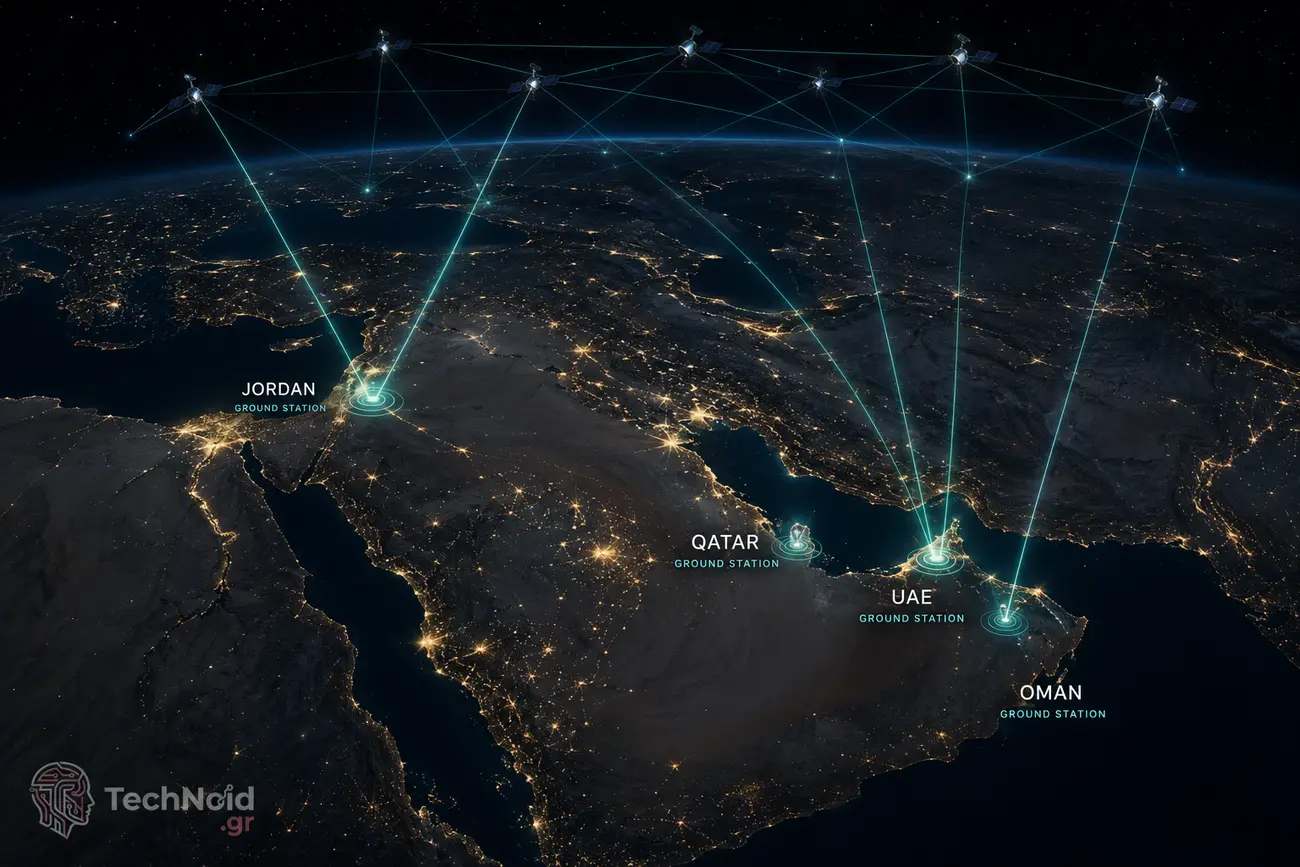
Iran has officially declared Elon Musk’s companies as military targets in the Middle East—and this isn’t empty rhetoric. The Iranian military, via state-run Fars News Agency, has specifically identified Starlink ground stations in Israel, Qatar, Jordan, the UAE, and Oman as legitimate targets in response to escalating US pressure on the country.
What makes this alarming isn’t just the threat itself. It’s that Starlink’s architecture in the Middle East relies heavily on these physical ground facilities, and an attack could disrupt satellite internet for millions of users across the region—including civilians, businesses, and potentially military operations that have come to depend on SpaceX’s network.
Here’s what’s actually at stake, why Iran sees Starlink as a threat, and whether the network can survive if these ground stations get hit.
What Iran’s Threat Actually Means
On June 10, 2026, Fars News Agency published a translated statement claiming Iran is targeting “all interests related to economic holdings managed by Elon Musk in West Asia” [web:1]. The report explicitly mentions a regional Starlink ground facility as part of this target list.
The timing is critical. This comes after US President Donald Trump threatened to seize Iran’s Kharg Island and take “total control” of the country’s oil market [web:5]. Iran’s response is asymmetrical: instead of direct military confrontation, it’s targeting assets it believes support US-Israel operations.
According to Reuters, Iranian intelligence has observed US and Israeli armed forces using Starlink for communications, and the satellite network has been instrumental in directing explosive-equipped drones [web:4]. This is Iran’s stated justification: Starlink isn’t just civilian internet—it’s part of the military infrastructure opposing Tehran.
Technoid Take: The real problem here isn’t whether Starlink is “actually” being used militarily. It’s that Iran believes it is, and in modern conflict, perception drives targeting. Once something gets labeled a military asset, civilian users get caught in the crossfire.
Why Starlink Ground Stations Matter
Most people think Starlink is just satellites talking to user terminals. That’s only half true. Starlink operates a hybrid network: approximately 10,000 low Earth orbit (LEO) satellites plus ground stations called “gateways” that connect to fiber networks [web:4].
Here’s how data flows:
- User terminal sends signal to satellite overhead
- Satellite downlinks to a ground station (gateway)
- Ground station routes data through terrestrial fiber to the internet
- Response follows the reverse path
Starlink has gateways in Oman (Murayjat, live) and Turkey (Muallim, live) in the Far East & Middle East region [web:11]. It also has Points of Presence (POP) in Qatar and possibly Oman that connect to fiber infrastructure [web:4].
If these ground facilities get attacked—physically or through cyber warfare—the satellites still orbit, but they can’t route data to the internet efficiently. Users would experience massive latency spikes or complete disconnections.
Middle East Starlink Coverage: Which Countries Are Active
Starlink’s Middle East footprint has expanded rapidly in 2025-2026. Here’s where it’s actually available:
| Country | Status | Notes |
|---|---|---|
| Oman | ✅ Active | First GCC nation (March 2025), has live gateway [web:11][web:17] |
| Qatar | ✅ Active | Has POP facility; defending against Iranian missile/drone strikes [web:4][web:13] |
| Israel | ✅ Active | Ground station on target list; heavy military use reported [web:4][web:13] |
| Jordan | ✅ Active | Service activated September 2025; ground station targeted [web:19][web:7] |
| UAE | ✅ Active (March 2026) | Licensed 2024 for specific uses; ground station threatened [web:13][web:14] |
| Yemen | ✅ Active | Operational but conflict zone [web:13][web:16] |
| Bahrain | ✅ Active (May 2025) | Expected launch; regulatory pending [web:17] |
| Kuwait | ✅ Active (March 2026) | Through local partner Sama X [web:14] |
| Saudi Arabia | ⏳ Pending | Approved for maritime/aviation only [web:17] |
In total, Starlink now serves over 10 million users globally with ~450Tbps capacity [web:14]. The Middle East expansion is strategic: these countries represent both civilian demand and critical geopolitical positioning.
Iran’s Electronic Warfare History Against Starlink
This isn’t Iran’s first attempt to neutralize Starlink. In January 2026, during a nationwide internet blackout, Tehran launched what experts call the first documented electronic warfare attack against consumer satellite internet [web:3].
The results were brutal:
- Packet loss spiked from 30% to 80% in protest hotspots [web:22]
- Starlink remained “operational but barely usable” [web:3]
- Users in Tehran experienced up to 40% packet loss, making video calls impossible [web:25]
How did Iran do it? Technical analysis from Starlink mobile app debug data shows the regime deployed GPS spoofing—not just jamming. The terminal detected 18 GPS satellites with valid lock but activated an “inhibitGps” flag, meaning anti-spoofing algorithms recognized the signals as fake [web:21].
💡 Pro-Tip: GPS spoofing is different from jamming. Jamming blocks signals (terminal shows “no GPS”). Spoofing injects false location data (terminal shows GPS but position is wrong). Starlink terminals need accurate GPS to calculate which satellites to talk to. When spoofed, they can’t align properly.
Experts believe Iran got this military-grade jamming technology from Russia or China—or developed it domestically using Chinese research [web:22][web:24]. This isn’t hobbyist harassment; it’s state-level electronic warfare.
[ad_3]
⚠️ Reality Check: The 2026 attack targeted user terminals inside Iran, not ground stations abroad. The new June 2026 threat is different: it explicitly names physical infrastructure in Israel, Qatar, Jordan, UAE, and Oman. If Iran attacks those, we’re talking about physical destruction or cyber warfare against gateway facilities—potentially more damaging than GPS spoofing.
What If Ground Stations Get Hit?
Let’s be clear: Starlink has redundancy. The satellites feature onboard laser links—over 24,000 lasers connecting the constellation—that let satellites share data amongst themselves [web:4].
SpaceX engineers report passing over terabits per second daily across 9,000 lasers, serving all users through laser links in a two-hour window [web:15]. The mesh network achieves 99.99% uptime with rapid route changing [web:18].
But laser links don’t solve everything. Without ground stations:
- Latency increases significantly: Data stays in orbit but can’t reach the internet backbone efficiently
- Cross-continental routes suffer: The “ping-pong” pattern through terrestrial fiber gets replaced by longer orbital paths [web:12]
- Some regions go dark: Areas without nearby satellites with laser connectivity lose access entirely
A thesis from the University of Washington showed LISL (laser inter-satellite links) dramatically reduce latency for high-frequency trading, telemedicine, cloud gaming, and video conferencing—but ground routing still matters for certain paths [web:12].
Technoid Insight: If Iran hits Starlink ground stations in the Middle East, the network won’t collapse completely. But users in the region will experience degraded performance—higher latency, intermittent drops, slower speeds. For civilians browsing social media, it’s annoying. For military drones or emergency communications, it could be catastrophic.
Alternatives to Starlink in the Middle East
If Starlink becomes unreliable in the Middle East, what else exists?
| Service | Coverage | Status |
|---|---|---|
| Amazon Project Kuiper | Global (planned) | Limited launches; not yet competitive in Middle East [web:23] |
| OneWeb | Partial global | Smaller constellation; limited Middle East presence [web:26] |
| Local Fiber/5G | Country-specific | Best speed/latency, but vulnerable to physical attacks |
🔄 Εναλλακτική: If you’re in the Middle East and Starlink becomes unstable due to geopolitical conflict, traditional fiber or 5G still offers better performance for most use cases. Starlink’s advantage is remote location coverage—offshore installations, ships, rural areas. If you’re in Dubai or Tel Aviv with good fiber, satellite internet is a backup, not your primary.
Amazon’s Project Kuiper is the only serious competitor coming, but it’s not ready for Middle East competition yet. As of May 2026, Starlink has 10,498+ satellites versus Kuiper’s limited deployment [web:23].
FAQ: Starlink Iran Threat
1. Is Iran actually going to attack Starlink facilities?
Iran has officially declared Musk’s companies as “military targets” via Fars News Agency, specifically naming ground stations in Israel, Qatar, Jordan, UAE, and Oman [web:1][web:5]. Whether they act depends on escalation levels. Iran already conducted electronic warfare against Starlink terminals inside Iran in January 2026, causing 80% packet loss [web:3][web:22]. Physical attacks abroad would be a major escalation.
2. Which Starlink ground stations are on Iran’s target list?
The threatened facilities include Starlink ground stations in Israel, Qatar, Jordan, the United Arab Emirates, and Oman [web:4][web:5][web:7]. Oman has a live gateway (Murayjat), and Qatar has a Point of Presence (POP) facility [web:11]. These connect Starlink satellites to terrestrial fiber networks.
3. Will Starlink stop working if ground stations get hit?
No, but performance will degrade. Starlink satellites have laser links (24,000+ connections) that let them share data without ground stations [web:4]. However, latency increases, some regions lose access, and cross-continental routes suffer [web:12]. The network won’t collapse, but users will experience slower speeds and intermittent drops.
4. Has Iran attacked Starlink before?
Yes. In January 2026, Iran launched the first documented electronic warfare attack against consumer satellite internet [web:3]. They used GPS spoofing (not just jamming), causing 30-80% packet loss in Tehran. Starlink remained “barely usable” but operational [web:3][web:21]. This targeted user terminals inside Iran, not ground stations abroad.
5. Why does Iran see Starlink as a military threat?
Iranian intelligence claims US and Israeli armed forces use Starlink for communications and drone coordination [web:4][web:10]. Tehran believes Starlink technology supports US-Israel military operations in the region. Even if civilian use dominates, Iran’s perception drives targeting—once labeled a military asset, it becomes a legitimate target [web:1].
6. What countries in the Middle East have active Starlink service?
Starlink is active in Oman (first GCC, March 2025), Qatar, Israel, Jordan (September 2025), UAE (March 2026), Yemen, Bahrain (May 2025), and Kuwait (March 2026) [web:13][web:14][web:17][web:19]. Saudi Arabia has approval only for maritime/aviation use. The UAE was licensed in 2024 for specific applications [web:13][web:17].
7. What are alternatives to Starlink in the Middle East?
Amazon Project Kuiper and OneWeb exist but aren’t competitive yet—Starlink has 10,498+ satellites vs. Kuiper’s limited deployment [web:23]. For most users in cities with good fiber or 5G, traditional broadband offers better speed/latency. Starlink’s advantage is remote coverage (offshore, rural, ships). If Starlink degrades, fiber/5G is the primary alternative [web:26].
Technoid Verdict: The Iran-Starlink conflict reveals a brutal truth about satellite internet: it’s not invulnerable. Ground stations are physical infrastructure that can be targeted. Laser links provide redundancy, but they don’t eliminate latency or regional blackouts. For Middle East users, Starlink remains valuable for remote areas—but it’s not a guarantee against geopolitical warfare. If you depend on it for critical communications, you need a backup plan.
The network will adapt. But adaptation comes at a cost: slower speeds, higher latency, and the constant risk that tomorrow’s news could include another ground station getting hit. That’s the reality of satellite internet in a conflict zone.